The Stadium Plaza Is Not Just a Waiting Area
A stadium plaza can serve the city between events as well as during them. Learn how changing uses, simple fixtures, and clear zones make that possible.
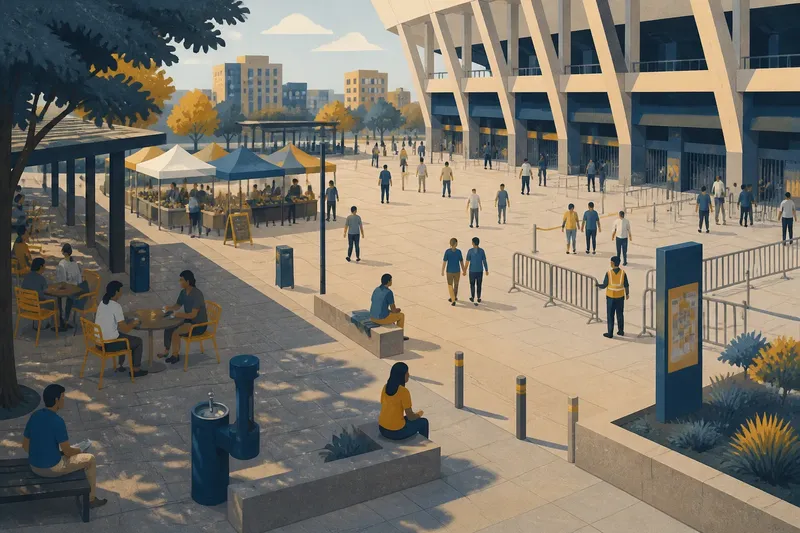
A stadium plaza changes character when the gates open, but it should not become a different place altogether. Its design can support civic activities on quiet days and event operations at busy times, provided each use has a clear place and neither erases the other.
Make room for ordinary life
Start by asking what the plaza could host when no one is arriving for a game or performance. A paved forecourt might accommodate a lunch break, a small public gathering, or a neighborhood market; a sheltered edge might offer a place to sit while waiting for transit. These uses depend on the surrounding district, not on the stadium’s calendar.
Look for clues in the physical setup. Shade, movable chairs, drinking fountains, power outlets, and nearby public restrooms can make a space more useful for lingering. A large blank surface may be easy to clear for a crowd but offer little reason to visit on an ordinary afternoon. The answer is not to furnish every inch. It is to make the space comfortable enough for the uses the district can sustain.
Imagine a plaza with a broad paved center and a shaded strip beside it. If the center must stay clear for event queues, movable chairs placed along the shaded edge could let office workers eat lunch without obstructing that future use. The visible result would be a place to pause on a quiet day and an open center when event operations begin.
Give activities their own zones
Different uses need different kinds of space. A market stall needs room for setup and browsing; a performance needs an audience area; a through-route needs to stay recognizable. Instead of treating the whole plaza as one flexible surface, consider how its edges, center, and sheltered areas could accommodate distinct activities.
Simple features can help define those zones without making them permanent: power connections near a potential performance area, seating at the perimeter, or removable bollards that mark where a stall may stand. The arrangement should leave the stadium entrances visible and provide a clear way for people to move around an activity. Flexibility is useful; a space that has no apparent purpose until someone installs a temporary fence is merely undecided.
- If an activity needs power, check for accessible outlets; if none are available, place it near an approved connection or choose an activity that does not need electricity.
- If seating would occupy a clear event area, check whether a sheltered edge can hold it; if so, keep seating there, and if not, use removable chairs that can be cleared before operations begin.
- If a proposed stall would block an entrance or service access, check its footprint against those openings; if it conflicts, move the stall to a designated edge or choose a smaller setup.
- If a gathering needs an audience area, check whether people can stand without blocking circulation; if they cannot, relocate it to a broader zone or reduce the audience-facing setup.
- If a public activity needs water or restroom access, check whether those facilities are open and reachable; if they are not, choose a different location or omit that activity.
- If event equipment would cover a plaza feature used for orientation, check whether another visible landmark remains; if not, shift the equipment or add temporary signs that can be read from the approaches.
Plan the changeover
A plaza that serves several purposes needs a legible transition between them. Event staff may install barriers, stands, signs, or screening; civic use may call for open space, temporary seating, or market equipment. The changeover works best when the places for those items are anticipated, rather than improvised across the entire forecourt.
Consider storage and access as part of the design. If chairs or market tables have nowhere suitable to go, they can end up blocking the routes they were meant to complement. If barriers must cross a path, the intended route around them should remain apparent. The goal is not to keep every use operating at once, but to avoid making each new setup feel like an entirely new plan.
Say a plaza has a removable seating area beside a designated event queue. On a non-event day, the chairs face a shaded edge; before a match, staff move them to a nearby storage room and set the queue within the marked zone. The tradeoff is straightforward: the seating area is not available during the event, while the queue and the route around it remain easier to understand.
Who uses the plaza between events?
Can a stadium plaza host a market?
It can if vendors have workable setup space, a way to access power where needed, and room for visitors to browse without blocking entrances. Local permits and operating rules may also apply, so organizers should confirm them with the relevant authority.
What makes a plaza comfortable for a short visit?
Shade, a place to sit, and a clear connection to nearby destinations can make a brief stop more appealing. The details should respond to local conditions and should not obstruct the space needed for event operations.
How can a plaza change for event day?
Use a planned arrangement for queues, barriers, signs, and temporary equipment, while keeping the remaining public routes intelligible. Staff should be able to set up and clear those elements without displacing every everyday feature.
Who approves activities in a stadium plaza?
Responsibility varies by ownership and local rules. Check with the stadium operator, property manager, or relevant public agency before planning an organized activity.
Match uses to the district
Not every stadium plaza needs a market, a performance, and a full program of public events. A district with nearby shops may benefit more from seating and a clear pedestrian connection; a site beside transit may need a sheltered place to wait. Useful civic space starts with the people and destinations already around it, not an ambitious list of activities.
For a stadium plaza to serve the city between events, its everyday purpose should be visible and its event arrangements should be planned around that purpose. When choosing a proposed use, check who it serves, what physical support it needs, and whether it can be set up and removed without making the rest of the plaza unusable.